
A session is a Git review workflow, not a security sandbox. Agents and editors still run with your normal permissions; the session tracks and reviews what changes in the repository.
Steps
- Click Session in the toolbar, give the session a name if you like, and click Start Session. RepoBeam records your branch and commit and creates a branch such as
repobeam/session/auth-refactor. - If you have uncommitted changes, choose Include in this session (a recovery checkpoint is created first) or Keep current work separate.
- Work with your agent or editor as usual.
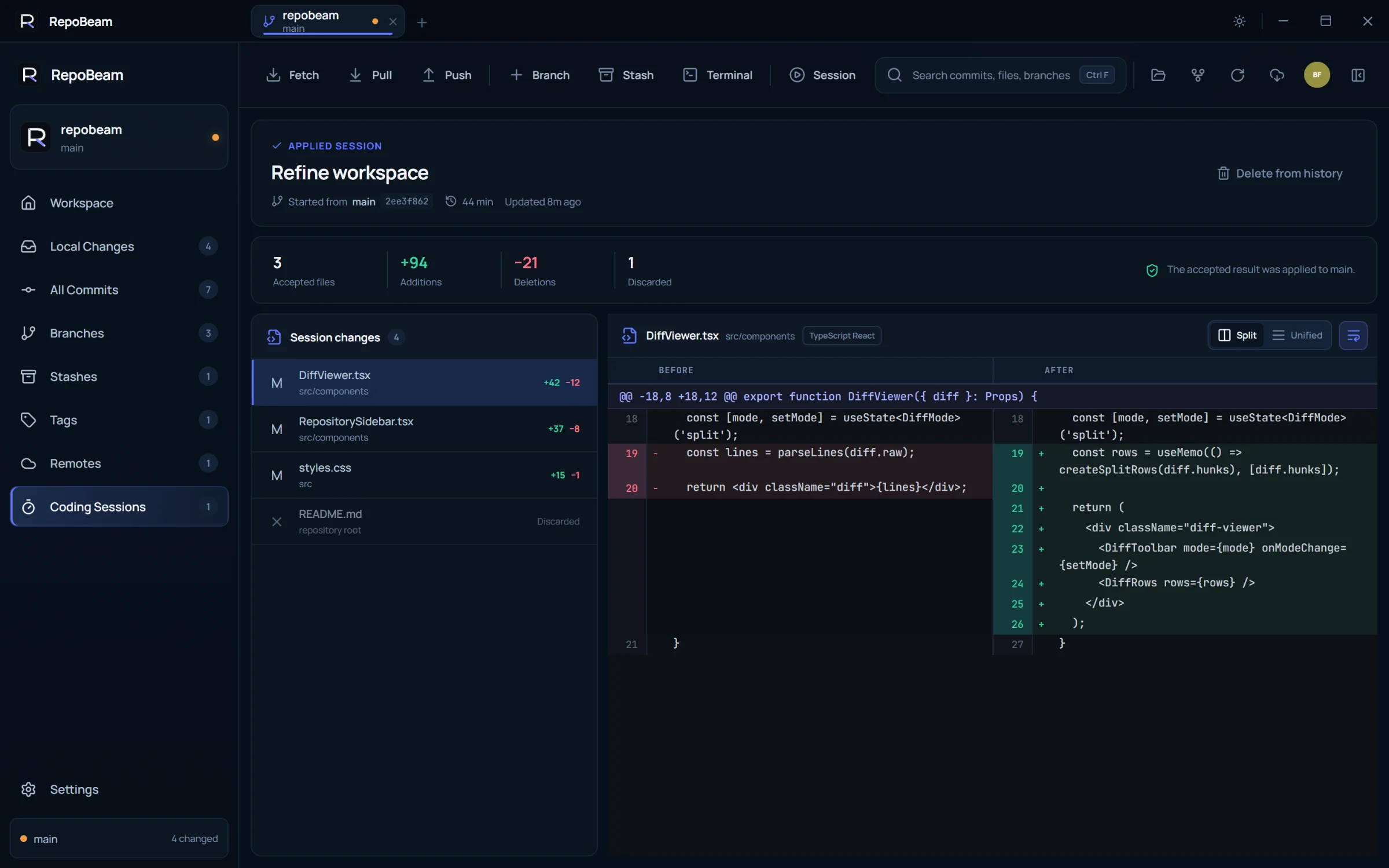
- Open Coding Sessions and select the session. Review each file under Session changes, and discard any file you don’t want — RepoBeam takes a recovery snapshot first.
- Click Apply to your original branch (for example Apply to main) to bring the accepted work back as uncommitted changes for a final review, or Merge session to merge it normally.
- Delete the session branch when you’re done. RepoBeam won’t delete it if it contains work you never applied.
Good to know
- Session records and recovery points are stored inside your repository’s
.gitfolder and aren’t pushed by normal Git operations. - Finished sessions can be removed with Delete from history. This doesn’t touch work you accepted or branches you kept.
- Sessions work with any tool, because they track changes in the repository instead of integrating with a specific agent.